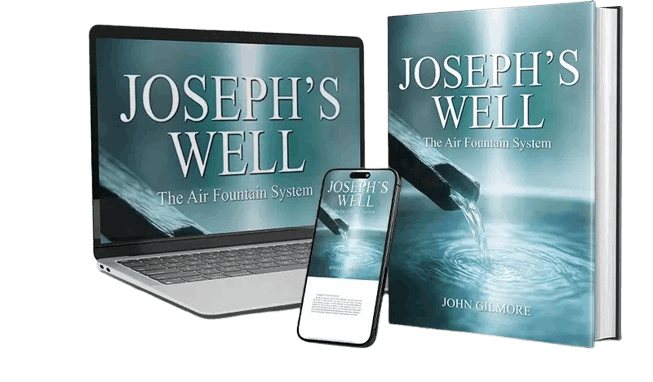
In an era marked by growing environmental uncertainties, resource strains, and a deep yearning for self-reliance, products that blend practical innovation with spiritual encouragement often resonate strongly. Joseph's Well stands out as one such offering — a detailed DIY guide focused on creating an atmospheric water generator. This review dives deeply into every aspect of the program, examining its foundations, mechanics, real-world applicability, and broader significance for families seeking security and provision.
Product: Joseph’s Well System
Creator: John Gilmore
Official Website: https://josephs-well-system.com/
Price: $39 (One-Time Payment for Lifetime Access)
Skill Level: All Levels / No Technical Experience Required
Guarantee: 60-Day 100% Money-Back Risk-Free Guarantee
Niche: Christian Preparedness / Off-Grid Water Harvesting / End-Times Survival / DIY Atmospheric Water Generator
Support: Unlimited Email Access to Creator + Printable Guides + Lifetime Updates
Recommend: Highly recommended for faithful families, homesteaders, and believers preparing for drought, collapse, or tribulation. A truly God-led solution for safe water independence—no plumbing, grid, or prior skills needed!
The joseph's Well System comes with a 100% money-back guarantee for 60 full days from the date of your original purchase.
If you're not completely satisfied with the system, your results, or your experience within the first 60 days, simply contact us through the Joseph's Well System Support Portal. We’ll process your refund within 48 hours, no questions asked!
Joseph's Well is a comprehensive DIY system designed to extract fresh, drinkable water from atmospheric humidity through condensation. Unlike traditional wells or rainwater collection, it draws moisture directly from the air, making it functional even in dry conditions. The guide promises a build cost under $150 using common hardware store materials, with operational expenses as low as 10 cents per hour.
At its core, the system replicates principles from Israeli military technology tailored for harsh desert environments where conventional water sources are unavailable. The DIY version is described as simpler and more accessible than commercial counterparts costing thousands, prioritizing family-scale production suitable for drinking, cooking, washing, and some storage.
Key differentiators include quiet operation, portability for potential relocation scenarios, and dual power compatibility — standard grid electricity or off-grid solar setups with a basic car battery and small panel. This versatility addresses edge cases like power outages or evacuation needs, evoking biblical precedents of fleeing danger while maintaining provision.
The program is not a pre-assembled unit but a complete educational package: step-by-step video instructions, printable blueprints, schematics, and a detailed materials list. It stresses beginner-friendliness, noting that basic skills like using a screwdriver suffice. This democratizes access, suggesting that determination matters more than prior expertise.
Nuances involve climate considerations — performance may vary with humidity levels, though testing reportedly confirmed efficacy in arid settings. Implications include reduced reliance on utilities, potential cost savings over time, and a sense of empowerment. The name itself honors Joseph the carpenter, symbolizing protective, obedient craftsmanship rather than grand prophetic gestures. 🌊
Water is fundamental to life — essential for drinking, cooking, hygiene, agriculture, and overall well-being. Yet, across many regions, reliable access to clean water is becoming increasingly fragile. Prolonged droughts, declining reservoir levels like those observed at Lake Mead (the largest U.S. reservoir, hitting historic lows) and Lake Superior, and the depletion of major aquifers such as the Ogallala create a compounding crisis. These changes are not sudden but part of a longer pattern, with the past several years marking intensified dry conditions that echo historical events like the Dust Bowl of the 1930s.
Families relying on wells face unexpected failures: dropping pressure, sputtering faucets, and complete dry-ups after years of dependable service. In rural or off-grid settings, such as a five-acre homestead in Arizona, this vulnerability turns personal. One documented experience involved a family who, after their 90-foot well ran dry, rationed limited stockpiles of around 500 gallons while facing a five-month drilling backlog. Matters escalated dramatically one night at 2:14 A.M., when intruders targeted stored water barrels, leading to violence and injury. This incident highlights how resource scarcity can escalate beyond inconvenience into genuine security threats.
Broader implications ripple through society. Farmers compete for dwindling supplies, cities implement rationing, crops suffer, and vulnerable populations — including the elderly — face heat-related health risks. Government and utility systems, while vital, show strains with backlogs, potential contamination concerns in tap water (including chemicals, pharmaceuticals, and other agents), and dependency risks during outages or emergencies.
Spiritually and culturally, many interpret these signs through biblical lenses: references to famine, withheld rain (Deuteronomy 11:17), and the opening of seals in Revelation, including the red horse of war and ensuing thirst. The result is a profound sense of unease — a "wilderness season" of testing where reliance on fragile systems leaves individuals unprepared. Lack of knowledge, as noted in Hosea 4:6, exacerbates destruction. Without proactive steps, families risk panic buying, displacement, or compromised health when faucets run dry. Edge cases include urban dwellers with limited storage, suburban households during grid failures, or those in arid climates where traditional collection methods falter. The problem is multifaceted: environmental, infrastructural, economic, and deeply personal. 💧

Joseph's Well addresses this challenge head-on by offering a complete DIY system for generating fresh, drinkable water directly from the air through condensation technology. Inspired by battlefield-proven methods developed for Israeli military operations in desert environments, it provides a resilient alternative that does not depend on wells, municipal pipes, rain, or vulnerable supply chains.
At its foundation, the system draws ambient humidity from the surrounding atmosphere, cools it to condense moisture into liquid form, filters it for cleanliness, and collects it for immediate use. The guide details building a functional unit for under $150 using readily available hardware store components and common scavenged parts (such as elements from old dehumidifiers or mini fridges). Operational costs stay remarkably low — under 10 cents per hour — making it sustainable long-term.
Key features enhance real-world usability:
Scalable Output: Capable of supporting family needs for drinking, cooking, washing, and light storage, with prototypes demonstrating reliable daily production even in dry heat.
Power Flexibility: Runs on standard household electricity or fully off-grid via a basic car battery and small solar panel, ensuring functionality during outages.
Portability and Discretion: Compact and quiet design allows indoor or outdoor placement and easy transport if relocation becomes necessary, mirroring biblical accounts of families moving to safety.
Beginner Accessibility: No engineering degree required — step-by-step videos, printable blueprints, schematics, and materials lists guide users through assembly. Basic tools like a screwdriver suffice, with clear troubleshooting for common issues like wiring or coil adjustments.
The development story underscores practicality. After personal hardship, the creator iterated through prototypes, refining filtration, cycles, and efficiency with help from experienced contacts. The result is a simplified, tested system that produced the first drops of clean water within minutes of activation — cold, clear, and life-giving.
Beyond mechanics, Joseph's Well integrates spiritual encouragement, naming the system after Joseph the carpenter: a figure of quiet obedience, protection, and provision who safeguarded his family and the Christ child. This framing transforms building into an act of faith and stewardship, aligning with Proverbs 6:6–8's call to prepare wisely like the ant.
🔍 Understanding the Broader Context of Need
The narrative around Joseph's Well emerges from a recognition of intensifying water challenges across regions. Stories of declining reservoir levels, such as those at Lake Mead and Lake Superior, alongside concerns over aquifers like the Ogallala, paint a picture of vulnerability. These are not abstract statistics but realities that affect daily life, from household faucets to agricultural stability.
The program connects these issues to historical patterns, referencing events like the 1930s Dust Bowl and drawing parallels to biblical accounts of drought and famine. It highlights how prolonged dry periods can strain infrastructure, leading to rationing, competition for resources, and even security incidents. One poignant example shared involves a family experiencing a direct threat over stored water, underscoring the human element beyond mere climate data.
From a preparedness perspective, Joseph's Well encourages proactive steps rather than reactive measures. It positions water independence as both a practical necessity and a matter of stewardship. This dual lens — environmental awareness paired with scriptural reflection — appeals particularly to those who view current events through a faith-informed worldview, seeing signs in "wars and rumors of wars" alongside natural shifts.
Nuances here are important. Not every region faces identical risks; arid zones like Arizona may experience more immediate pressures than humid areas, yet the guide emphasizes adaptability. Edge cases, such as urban apartments versus rural homesteads, receive consideration through discussions of portability and varied power options. The implication is clear: preparation fosters resilience, reducing dependence on potentially strained municipal systems. 🙏
The joseph's Well System comes with a 100% money-back guarantee for 60 full days from the date of your original purchase.
If you're not completely satisfied with the system, your results, or your experience within the first 60 days, simply contact us through the Joseph's Well System Support Portal. We’ll process your refund within 48 hours, no questions asked!
Central to the program's authenticity is the story of John Gilmore, presented as a husband, father, and hands-on builder living on five acres in Arizona. His account details a transition from a functional well to unexpected failure, followed by a nighttime confrontation where water barrels were targeted. This incident, resulting in injury and a hospital visit, serves as a catalyst for deeper reflection.
Gilmore describes rationing limited stockpiles (around 500 gallons), navigating drilling backlogs, and grappling with the emotional and spiritual weight of vulnerability. His background — building his own home, growing food, raising chickens, and teaching self-sufficiency to his son — grounds the narrative in lived experience rather than theory.
The turning point involves prayer and consultation with trusted contacts in off-grid and survival communities. Discovering condensation-based technology, originally developed for desert military operations, sparked the idea of adaptation. Gilmore's process included scavenging parts from dehumidifiers, refrigerators, and other household items, enduring failed prototypes with burnt wiring and cracked components.
This journey mirrors biblical figures like Joseph the carpenter — emphasized for his quiet obedience, protection of his family, and provision. The program frames Gilmore's efforts as an extension of that spirit: building not for glory but for faithful responsibility. Implications extend beyond one family; the sharing of the solution suggests a ministry-like calling to equip others.
Examples of persistence, such as late nights in the garage and collaboration with a friend experienced in commercial coolers, illustrate the trial-and-error reality. This transparency adds credibility, acknowledging imperfections while highlighting eventual success. For readers facing similar uncertainties, it models resilience and resourcefulness. 💪
The condensation process forms the foundation: air is drawn across cooled coils, causing moisture to condense into liquid form, which is then collected, filtered, and made available for use. Gilmore's prototype development involved refining the condenser cycle, filtration loop, and overall efficiency through iterative adjustments.
Detailed components typically include fans, cooling elements, collection tanks, and basic filtration — many sourced from everyday appliances. The guide covers wiring, assembly, and troubleshooting to ensure reliable output. Claims suggest meaningful daily production for household needs, though exact figures depend on environmental factors like temperature and relative humidity.
Off-grid adaptation is a standout feature. Integrating solar power eliminates ongoing electricity costs and enhances mobility. Instructions detail safe configurations, emphasizing simplicity to avoid overwhelming users. For instance, the system can run quietly in a backyard or even indoors in some setups, minimizing visibility during heightened resource tensions.
Edge cases explored include maintenance routines (described as minimal), scaling for larger families, and integration with existing storage solutions. Practical examples might involve using generated water alongside greywater systems or vinegar-based cleaning to stretch supplies during shortages.
From a scientific angle, the guide aligns with established atmospheric water generation principles, though real-world performance requires user calibration. Nuances such as filter replacement schedules and water quality testing are addressed to promote safety. The spiritual overlay — viewing the air's moisture as "God-given" provision — enriches the technical explanation, framing engineering as stewardship. 🔬
One of the program's strengths is its structured instructional format. Users receive video walkthroughs demonstrating each phase, from gathering materials to final testing. Blueprints provide visual clarity, allowing quick reference during assembly.
Gilmore shares his own challenges — initial failures leading to refinements — which prepares builders for potential hurdles. Collaboration with experienced contacts highlights the value of community knowledge. The materials list includes sourcing tips, making procurement straightforward regardless of location.
For a family project, it could involve teenagers or spouses, fostering shared purpose. Time estimates suggest completion within a day for motivated builders, though patience is advised for testing and optimization.
Considerations for different skill levels include clear explanations avoiding jargon, with visual aids compensating for limited experience. Edge cases like tool substitutions or regional material variations receive attention through support channels.
Implications of successful completion extend to daily routines: morning water collection becoming a moment of gratitude rather than anxiety. The portability aspect prepares for scenarios requiring quick relocation, aligning with themes of readiness. Overall, the process emphasizes empowerment through action, echoing Proverbs' call to observe and prepare wisely. 📐
Users can expect several practical advantages. Primary among them is on-demand water generation independent of wells, municipal supplies, or weather-dependent collection. This provides peace during droughts or infrastructure disruptions.
Cost efficiency stands out: initial investment remains low compared to commercial alternatives, with negligible running costs. Over months, savings on bottled water or utility bills accumulate. Quiet, low-maintenance design suits various living situations — homesteads, suburbs, or even apartments with outdoor access.
Health and safety aspects include filtration for clean output, supplemented by guidance on mineralization. Portability supports emergency preparedness, whether for short outages or longer displacements.
Broader applications include community support: excess water shared with neighbors or church groups during crises, positioning builders as providers. Spiritually, it cultivates gratitude and obedience, transforming potential scarcity into an opportunity for faith expression.
Examples from reported users illustrate relief from dependency, with one noting freedom from bottled water purchases and another highlighting family involvement in construction. Nuances involve managing expectations — output varies, requiring complementary strategies like conservation. Implications for long-term resilience are significant, especially as environmental pressures evolve. 🌍
Air Fountain System comes with a 100% money-back guarantee for 60 full days from the date of your original purchase.
If you're not completely satisfied with the system, your results, or your experience within the first 60 days, simply contact us through the Air Fountain System Support Portal. We’ll process your refund within 48 hours, no questions asked!
The core guide is enhanced by three exclusive bonuses, each addressing complementary aspects of water security.
Bonus #1: How to Secure Your Water Reserves 📦
This manual draws on biblical precedents of stockpiling, offering strategies for safe storage, container selection, rotation, and contamination prevention. It covers durations from short-term to extended periods, practical for integrating generated water with reserves.
Bonus #2: How to Purify and Mineralize Water 🧪
Beyond the system's output, techniques for handling various sources (rain, streams, etc.) are detailed, including solar disinfection, boiling, and natural remineralization. This ensures versatility and maintains water's life-giving qualities.
Bonus #3: The Deadly Agents In Your Water ⚠️
An eye-opening report examines common contaminants in tap sources, empowering informed decisions. It promotes vigilance without alarmism, focusing on protective measures.
Together, these bonuses create a holistic toolkit, extending value far beyond the generator itself. Their standalone worth is noted, yet included at no extra cost, enhancing the overall package. Detailed exploration of each reinforces thorough preparation across physical and informational dimensions. 📚
Testimonials provide glimpses into practical outcomes. Adam B. from Missouri described building with his teenage son, noting clear instructions and consistent morning water flow, leading to reduced fear. Lena R. from Texas expressed initial skepticism but confirmed functionality, appreciating solar integration and liberation from purchases.
Deacon Mark C. from Arizona, knowing Gilmore personally, vouched for character and reliability, framing the system as purposeful provision. These accounts, while individual, suggest patterns of accessibility, effectiveness, and spiritual encouragement.
Nuances include varied starting points — some with technical comfort, others as novices — yet shared success through following directions. Implications point to communal ripple effects, where one family's preparation inspires others. Such feedback, combined with the guarantee, supports confidence in exploration. 👥
The program is positioned at a one-time contribution of $39, framed as support for ongoing mission elements like hosting and personalized assistance rather than high-margin profit. This contrasts sharply with expensive commercial units, offering substantial accessibility.
Value assessment considers the comprehensive materials: videos, blueprints, lists, support, and bonuses. Unlimited email guidance from Gilmore addresses implementation questions, climate adaptations, or troubleshooting. The 60-day guarantee allows risk-free evaluation, with full refunds if expectations aren't met.
For budget-conscious families, this represents a low barrier compared to stockpiling gear or professional installations. Long-term returns through independence and peace of mind amplify perceived worth. Edge cases, such as those with very limited funds or skills, benefit from the emphasis on common parts and simplicity.
Broader considerations include opportunity cost — investing time in building versus other preparations — yet the program's design minimizes this through efficiency. Overall, it presents as a mission-aligned, equitable option for serious preparers. 💵
While promising, thoughtful review includes potential challenges. Atmospheric water generation depends on ambient humidity; very dry environments may yield lower outputs initially, necessitating optimization or supplementation. Builders should anticipate minor adjustments during first uses.
Technical maintenance, though minimal, requires basic oversight of filters and components. Legal compliance with local regulations for water systems or electrical setups is advised, as emphasized in disclaimers. Results vary individually, aligning with educational rather than guaranteed performance claims.
Spiritual framing may not appeal universally, yet the practical elements stand independently. Edge cases like extreme weather, space constraints, or health considerations (e.g., water testing) warrant additional user diligence. The guide's support mitigates many issues, but commitment to learning remains key.
These nuances do not diminish core value but highlight responsible implementation. Implications encourage holistic preparedness — combining the system with conservation, community networks, and faith practices. 🔍
The joseph's Well System comes with a 100% money-back guarantee for 60 full days from the date of your original purchase.
If you're not completely satisfied with the system, your results, or your experience within the first 60 days, simply contact us through the Joseph's Well System Support Portal. We’ll process your refund within 48 hours, no questions asked!
No. If you can use a screwdriver and follow basic instructions, you can build this.
The full system can produce up to 50 gallons/day in optimal humidity. The home-built version provides plenty for drinking, cooking, and washing.
Yes. It works with a small solar panel and basic car battery. You can also plug it into a regular wall outlet.
Absolutely. It’s a home-built appliance, not a plumbed-in utility system.
Immediately. Once you order, you’ll get instant access to the entire Joseph’s Well System guide and bonuses.
Access to Joseph's Well is available exclusively through its official platform as a digital program delivered instantly upon purchase. The one-time contribution is set at $39, covering the full video guide, blueprints, materials list, power instructions (on-grid and solar), bonuses, and ongoing email support. This modest amount supports maintenance of resources and mission continuity while keeping it accessible compared to commercial alternatives priced in the thousands.
To proceed:
Visit the official Joseph's Well site.
Review the detailed information and testimonials.
Complete the secure order process for immediate access to downloads and support details.
Joseph's Well emerges as a thoughtfully crafted program merging innovation, accessibility, and encouragement. Its detailed guidance, supportive resources, and focus on real needs offer substantial value for those exploring water independence.
Whether motivated by practical concerns, spiritual conviction, or both, the system provides a pathway to greater security and peace. By equipping ordinary individuals to build meaningful solutions, it contributes positively to personal and communal well-being.
For families ready to invest time and modest resources into preparation, this represents a compelling option worth serious consideration. The emphasis on action, faith, and provision resonates as a timely resource.
#JosephsWellSystem #JosephsWellSystemReview #JosephsWellSystemReviews2026 #JosephsWellSystemAppReview2026 #JosephsWellSystemBonus #JosephsWellSystemProduct #JosephsWellSystemPrice #JosephsWellSystemOffers #JosephsWellSystemBonuses #JosephsWellSystemBuy #JosephsWellSystemWebsite #JosephsWellSystemSite #JosephsWellSystemApp #JosephsWellSystemHonestReviews #JosephsWellSystemLatestReviews #JosephsWellSystemUsersExperience #JosephsWellSystemUsersReview #JosephsWellSystemDemo #JosephsWellSystemTutorial #JosephsWellSystemPurchaseOnline #JosephsWellSystemBuyIt
Mobirise.com